High-quality background information for sustainable decisions in support of projects.
Fish and Water Research Ltd. has extensive experience in conducting studies and impact assessments for various projects’ environmental permit processes. Specialized studies are needed as the basis for the environmental impact assessment program and report, and deficiencies in these can later prove costly in permit processes. Investing in quality is worthwhile so that environmental issues can be considered and the project can proceed on schedule.
When an environmental expert is involved in the planning early enough, it is possible to prevent time-consuming and costly conflicts with minimal changes and cost impacts. For example, fish spawning areas are concentrated in very limited areas in the coastal zone or offshore shallows. These often small areas can produce a significant portion of the fry and are therefore valuable for fish stocks. Avoiding significant fry production areas during water construction is crucial to implementing the project sustainably without endangering the most sensitive phases of the fish life cycle.
Fish and Water Research Ltd. has decades of experience working in projects as an impartial expert. With our experienced expert team and extensive range of methods, we can offer our customers high-quality specialized expertise at all stages of the project. This helps our customer avoid pitfalls that slow down the project cost-effectively and promote it in accordance with sustainable development principles.

Featured Project

Environmental Impact Assessment (EIA), Case Blastr
Kala- ja vesitutkimus Oy has a long history of collecting data and conducting environmental impact assessments for fisheries as part of the EIA process. One example is the EIA for Blastr Green Steel’s green steel plant in Inkoo. To describe the current state of fish stocks and fishing in the area, juvenile fish sampling and habitat surveys were carried out, along with a study of commercial fishing and a review of previous investigations conducted in the region.
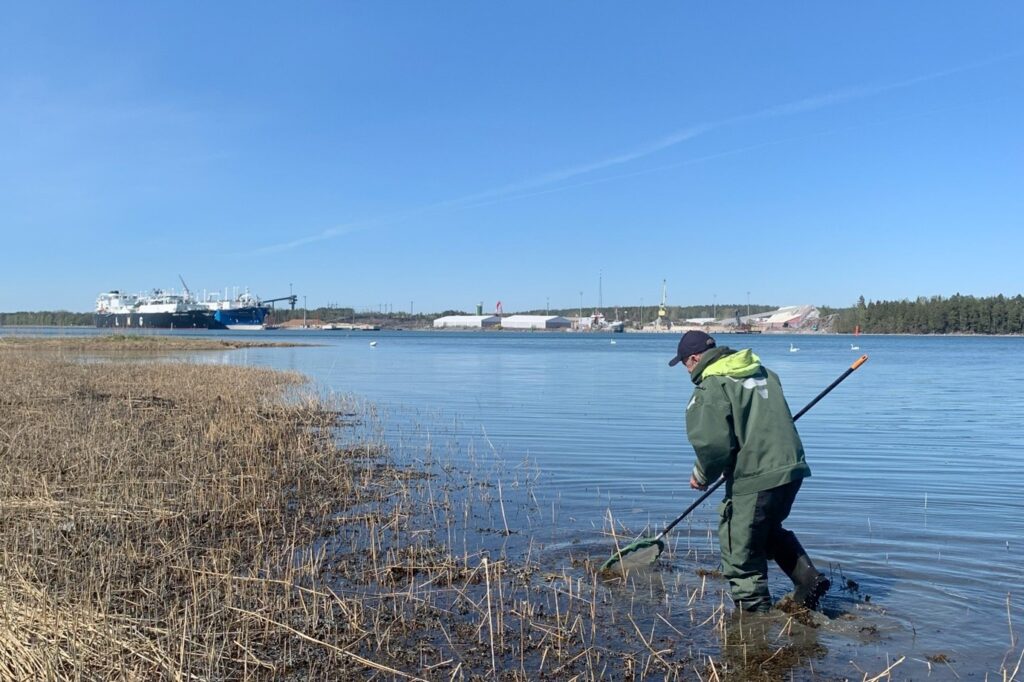
Field studies focused on juvenile fish production areas near the coastal project site, including spawning grounds and early feeding habitats. The juvenile fish and habitat surveys involved several methods, such as sampling pike eggs/larvae, mapping pelagic juveniles using the Gulf Olympia sampling device, and assessing the presence of juveniles in the shoreline zone with seine nets. Commercial fishing in the project area was also studied through a questionnaire survey.
Commercial trawl fishing around offshore disposal sites was analyzed using spatial data from the satellite-based Vessel Monitoring System (VMS), which provides information on trawling areas and timing. Potential herring spawning grounds near the disposal sites were assessed based on depth data and materials from the VELMU project.
The impact assessment evaluated construction-phase effects on fish stocks, including turbidity and increased sedimentation, underwater noise, and habitat loss both at the project site and the marine disposal area. Fishing is indirectly affected mainly by the same mechanisms as fish stocks.
Among the operational-phase impacts on fisheries, the most significant are seawater intake and discharge for cooling. Fish are drawn into the cooling system during water intake, with newly hatched larvae being particularly vulnerable due to their limited swimming ability. Cooling water discharge locally raises sea temperature, which has various effects, such as increased eutrophication. Warm-water species like cyprinids may benefit from higher temperatures, while cold-water species avoid elevated temperatures during summer. Increased temperature has been observed to affect gamete and embryo development in some fish species, and newly hatched fish are sensitive to rapid temperature changes.
Afry Finland Oy was responsible for carrying out the EIA process and preparing the EIA report. The impact assessment utilized, where applicable, multi-criteria evaluation practices and tools developed in the EU LIFE+IMPERIA project to assess the significance of impacts. The coordinating authority issued a reasoned conclusion on the project in spring 2025.